
Urethral Stricture Treatment in Hyderabad
Experiencing a weak urine stream, difficulty passing urine or repeated urinary infections? A urethral stricture is a narrowing of the urethra caused by scar tissue that can obstruct urine flow. A qualified urologist can evaluate the cause and discuss suitable treatment options.
Book an Appointment Explore TreatmentsPersonalized assessment for urinary blockage and urethral narrowing.
Urethral Stricture Care
Diagnosis · Treatment · Follow-up
What Is a Urethral Stricture?
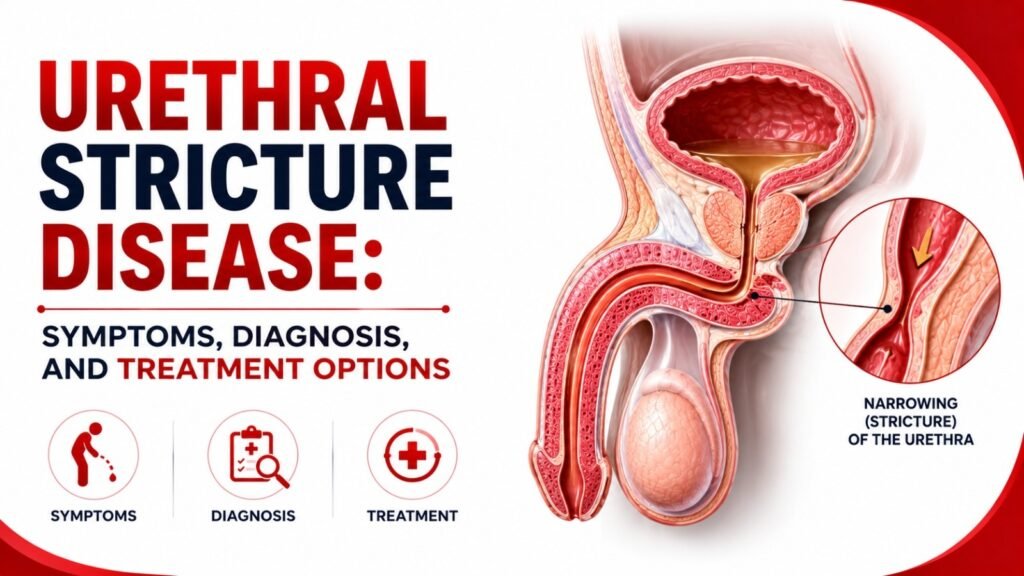
A urethral stricture is a narrowing of the urethra, the tube that carries urine from the bladder out of the body. Scar tissue can restrict urine flow and make bladder emptying difficult.
The narrowing may develop after injury, inflammation, certain medical procedures or sometimes without a clearly identified cause. Treatment depends on the stricture's location, length, severity and previous treatment history.
When Should You Seek Evaluation?
- Weak or narrow urine stream
- Difficulty starting urination
- Straining to pass urine
- Frequent urinary tract infections
- Feeling that the bladder does not empty fully
- Previous urethral injury or instrumentation
Common Symptoms of Urethral Stricture
Symptoms may develop gradually or become more noticeable as the narrowing worsens.
Weak Urine Stream
Urine flows more slowly or with less force than usual.
Difficulty Urinating
Needing to strain or wait before urine begins to flow.
Incomplete Emptying
A lingering feeling that urine remains in the bladder after urination.
Frequent Urination
Needing to urinate more often, sometimes because the bladder does not empty effectively.
Urinary Discomfort
Burning or discomfort may occur, particularly if infection is also present.
Recurrent Infections
Urinary stasis caused by obstruction can contribute to repeated urinary infections.
What Causes Urethral Stricture?
Several conditions can damage the urethra and lead to scar tissue formation.
Urethral Injury
Trauma to the pelvis or perineal area can damage the urethra and cause scarring.
Previous Procedures
Certain catheter insertions, endoscopic procedures or urethral surgeries can sometimes lead to scarring.
Inflammation or Infection
Some infections or inflammatory conditions can damage urethral tissue.
Previous Urethral Surgery
Scar tissue can develop after procedures performed to treat earlier urethral problems.
Skin Conditions
Conditions such as lichen sclerosus can affect the genital skin and urethral opening.
Unknown Cause
In some patients, no clear cause is identified after evaluation.
How Is Urethral Stricture Diagnosed?
Your urologist reviews your symptoms, medical history and previous urinary procedures. Investigations help identify the narrowing and plan appropriate treatment.
- Urine flow test (uroflowmetry)
- Ultrasound assessment of urine remaining in the bladder
- Retrograde urethrogram (RUG) or other contrast imaging when indicated
- Cystoscopy to examine the urethra and bladder when appropriate
- Urine tests if infection is suspected
Why Is Accurate Diagnosis Important?
Knowing the length, location and severity of the narrowing helps the urologist select a suitable treatment. Previous treatments and the presence of infection or urinary retention also matter.
Urethral Stricture Treatment Options
Treatment depends on the stricture's characteristics, previous procedures, symptoms and overall health.
Urethral Dilatation
A clinician gently widens the narrowed area using specialized instruments. Recurrence is possible, and repeat procedures may be needed.
Internal Urethrotomy (DVIU)
A specialised instrument is used to make an incision in selected strictures to improve urine flow. Suitability depends on the stricture and treatment history.
Urethroplasty
Reconstructive surgery repairs or replaces the narrowed segment. It may be considered for longer, recurrent or otherwise unsuitable strictures.
Catheter Management
A catheter may be required in selected situations to drain urine or support recovery after a procedure.
Treat Associated Infection
If a urinary infection is present, appropriate assessment and treatment are important before or alongside planned care.
Follow-up Monitoring
Follow-up checks help assess urine flow, symptoms and possible recurrence after treatment.
Important: No single procedure is suitable for every stricture. Repeated dilatation or urethrotomy may have a higher chance of recurrence in some cases. Discuss the benefits, risks and alternatives with your urologist.
Recovery After Urethral Stricture Treatment
Recovery varies according to the procedure performed, the extent of reconstruction and your individual health.
Follow Instructions
Follow your surgeon's instructions about medication, wound care, catheter care and activity.
Attend Follow-up
Follow-up may include symptom review, urine flow testing or other investigations to monitor recovery.
Watch for Warning Signs
Report worsening pain, fever, significant bleeding or problems with a catheter promptly.
Frequently Asked Questions About Urethral Stricture
1. Can a urethral stricture be treated?
Yes. Treatment options include dilatation, internal urethrotomy and urethroplasty. The appropriate option depends on the stricture and the patient's history.
2. Can a urethral stricture come back after treatment?
Yes. Recurrence is possible, particularly after some endoscopic treatments. Follow-up helps identify persistent or returning narrowing.
3. What is urethroplasty?
Urethroplasty is reconstructive surgery to repair a narrowed section of the urethra. The specific technique depends on the location and length of the stricture.
4. Is urethral stricture the same as an enlarged prostate?
No. A stricture is scar-related narrowing of the urethra, whereas prostate enlargement can compress the urethra from surrounding prostate tissue. Both can cause urinary symptoms.
5. Which tests are used to diagnose a stricture?
Evaluation may include urine flow testing, bladder ultrasound, urethral imaging and cystoscopy, depending on the clinical situation.
6. When should I see a urologist?
Seek assessment for a persistent weak stream, straining, repeated urinary infections or incomplete bladder emptying. Inability to urinate requires emergency care.
Looking for Urethral Stricture Treatment in Hyderabad?
Book a consultation to discuss urinary symptoms, diagnostic testing and suitable treatment options with a qualified urology specialist.
Call for an AppointmentDisclaimer: This page is for educational purposes and does not replace professional medical advice, diagnosis or treatment. Have the medical content reviewed by a qualified clinician before publication.